Category: Uncategorized

  • Join me for Dinner!

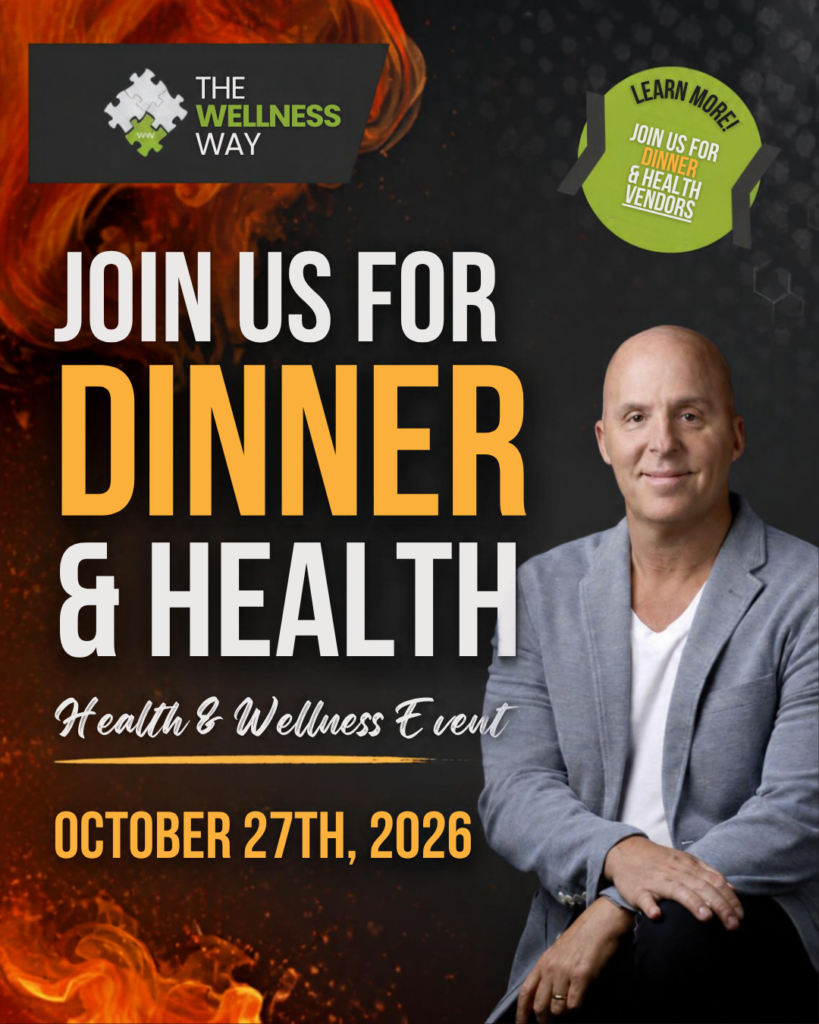
    I am joining the Wellness Way of Leesburg in this Health and Wellness event featuring Dr. Patrick Flynn, DC. As the founder of the Wellness Way, author and international speaker, he will share a new approach to Inflammation.

    Approach to Inflammation Health & Wellness Event

    Where: ­Leesburg Volunteer Fire Company215 Loudoun St SW, Leesburg, VA 20175

    When: October 27, 2026

    5 to 8 PM

    Use code Jill for your discount ­GET YOUR TICKETS HERE!

    ABOUT THE EVENT

    Our upcoming Approach to Inflammation Health & Wellness Event is shaping up to be an incredible evening of education, food, and community.­When you attend, you’ll enjoy:


    ✅ A presentation from Dr. Patrick Flynn, DC – CEO of The Wellness Way!
    ✅ Dinner catered by Mezeh Mediterranean Grill
    ✅ Access to local health and wellness vendors
    ✅ Opportunities to connect with others pursuing better health

    ✅ Vendor prizes/giveaways including testing from The Wellness Way!


    Featured Vendors Include: 

    • Pani Zina
    • Be So Daring
    • New Beginnings by Sheeri
    • MovementX
    • BFS
    • Jill Ryan Health & Wellness Coaching
    • Dr. Christine Hart Kress, Menopause Specialist
    • EnviroPure Mold Services
    • SweatHouz (tentative outdoor cold plunge experience)

  • Did AI eliminate your brain break?

    Did AI eliminate your brain break?

    Did AI Eliminate Your Brain Breaks?

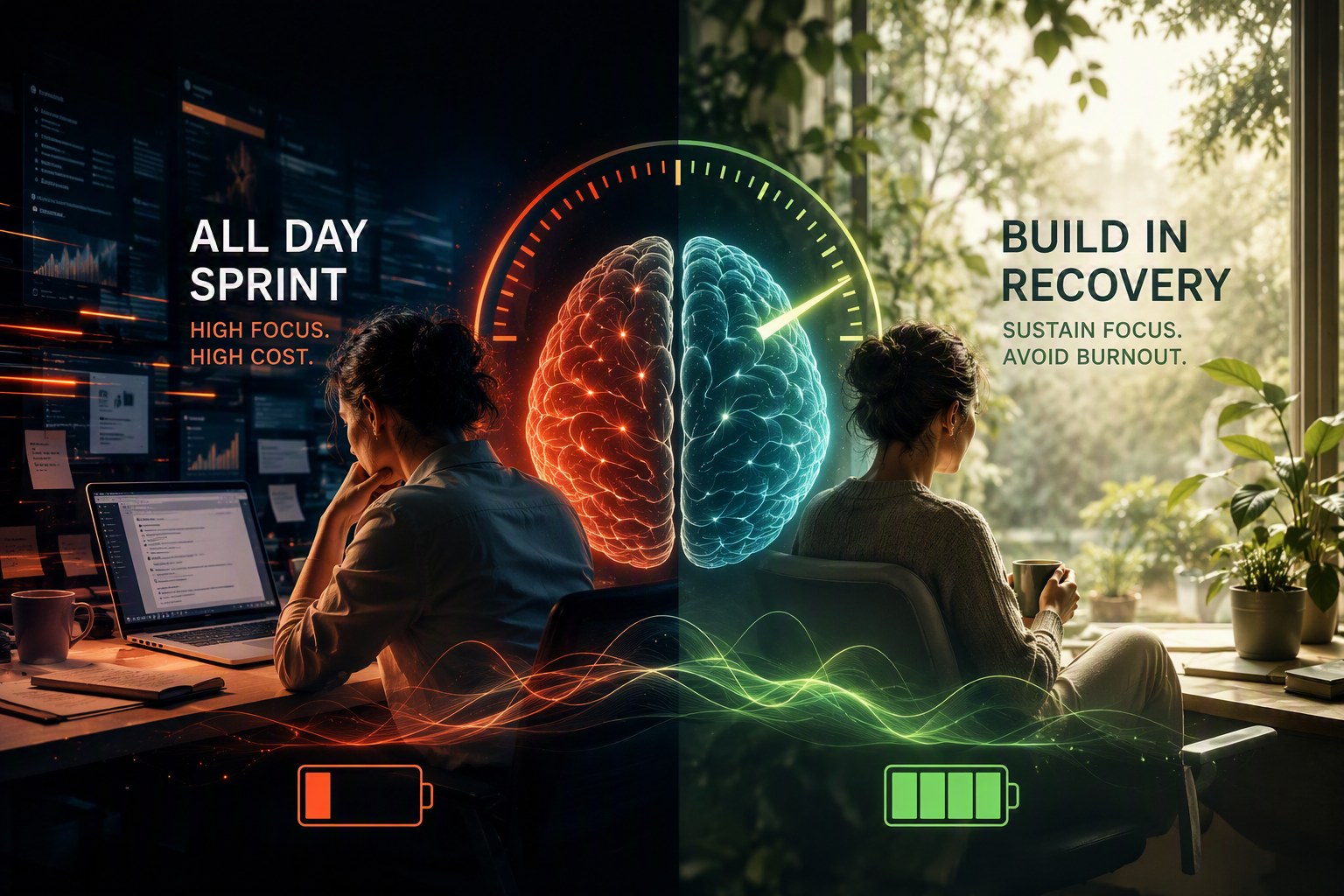
    Have you noticed that the more productive you become with AI, the more mentally exhausted you feel? How much of it could be related to treating your work day like an all-out sprint rather than an endurance race?

    Stick with me on this one.

    Before AI assistants, most workdays included a mix of mental demands. We spent part of the day solving problems, creating presentations, analyzing information, or making decisions. But we also spent time on lower-intensity tasks such as organizing notes, entering data, or cleaning up reports.

    Those routine activities weren’t always enjoyable, but they allowed our brains to shift into a lower gear. The energy and concentration levels needed ebbed and flowed naturally.

    As AI joined our team, we began offloading those lower-intensity tasks, concentrating more of our day in the activities that require judgment, creativity, strategic thinking, and decision-making.

    The work is often more meaningful, but it is also more mentally demanding.

    Compare this to a high intensity interval workout (HIIT) for your brain – short periods of intense work coupled with recovery time. Now remove all the recovery segments and you are left with nothing but an all-out sprint.

    Many knowledge workers are unintentionally doing exactly that. This is unsustainable. The problem isn’t necessarily that AI is increasing the amount of work. It’s that AI may be increasing the concentration of cognitively demanding work.

    If you never let off the proverbial brain gas pedal, burnout becomes much more likely.

    The next adaptation may be learning how to keep the productivity gains of AI without leaving ourselves mentally depleted.

    What does that look like?

    1. Develop Awareness
    Pay attention to your cognitive energy throughout the day.
    When do you feel sharpest? When does your mental tank run low? Are you taking breaks before you need them, or only after you’re exhausted?
    Understanding your own patterns is the first step.

    2. Build Recovery Into Your Workday
    Treat focused thinking like an interval workout. Schedule blocks of deep work but also schedule deliberate recovery periods afterward.

    Recovery doesn’t mean doing nothing. It means shifting to a lower cognitive load. Take a walk. Have a conversation with a colleague. Sit quietly with your coffee. Paint or draw. Let ideas ruminate without actively directing them.
    Think of it as putting your brain into Zone 2.

    3. Redefine Productivity
    AI can help you accomplish more. That doesn’t mean you should continuously operate at maximum intensity.

    The goal isn’t to maximize productivity every minute of the day. The goal is to sustain high-quality thinking over the long term. Just as athletes need recovery to perform at their best, knowledge workers need cognitive recovery to maintain creativity, focus, and energy.

    AI may be changing how we work. It may also require us to rethink how we recover.

  • New Years Resolutions – are you in or out?

    New Years Resolutions – are you in or out?

    New Years Resolutions – are you in or out?

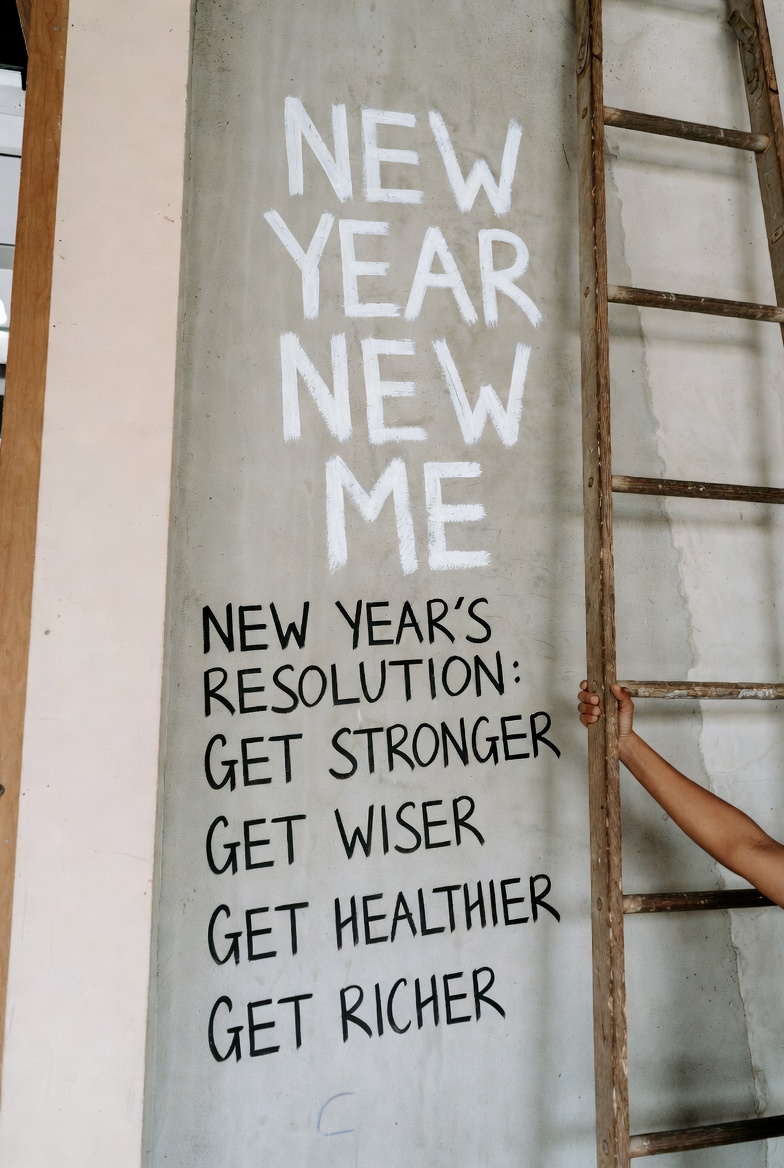
    It is the time of year that we all begin reflecting on the current year and the question of a new year resolution comes to mind. The statistics on their success rate are really quite grim. A CBS News’ survey found less than 10% actually accomplish the goal overall. What can we do? How do we increase the success probability of achieving the changes we desire?

    What if we stopped looking at them as resolutions and started treating them like goals? For some reason, we look at resolutions as an all-in, boil-the-ocean, expectation of perfection on January 1. As soon as we miss a day, failure creeps into our minds. We may or may not give up, maybe we give ourselves a little grace, a mulligan or two. But as the misses mount up, the weight of failure gets heavy and we give up.

    A goal on the other hand has an expectation that it is not achieved immediately, you must work toward success through progression. In this sense, we must start where we are and build up to the point we desire. We may build in periods where we falter or even plateau and include strategies to adjust and overcome. The aim of success is a date in the future, not the starting point of the change.

    How does this resonate with you? Have you mastered the Resolution game? What success have you found? With a 90% failure rate, we are definitely not alone.

    Change is hard. Making lifestyle changes after decades of building comfortable habits can seem impossible. This is what Health and Wellness coaching is for.

  • Paradigm Shift: Work-Life to Work-Health Balance

    Paradigm Shift: Work-Life to Work-Health Balance

    Is work-life balance still relevant?

    For decades, work-life balance has been a guiding principle, but its meaning has evolved across generations:

    • Boomers valued professional loyalty.
    • Gen X focused on structured time division between work and personal life.
    • Millennials linked mental health and well-being to productivity.
    • Gen Z emphasizes boundaries and holistic wellness.

    Despite these shifts, the traditional model still frames balance as a time-based metric—how much time is allocated to work versus “life.” This approach is outdated because it overlooks the deeper impact of work and life activities on overall health.

    Why a New Model?

    As a Gen Xer, the concept of balance was about avoiding burnout while maximizing productivity. But simply preventing burnout does not create healthy workers. Health is multidimensional—physical, mental, emotional, social, financial—and every activity, whether paid work, volunteering, or family time, influences these dimensions.

    Stress management is a prime example: unmanaged stress undermines sleep, emotional stability, and physical health. Financial insecurity (linked to work) affects mental well-being and relationships. Everything is interconnected.

    The New Paradigm: Work-Health Balance

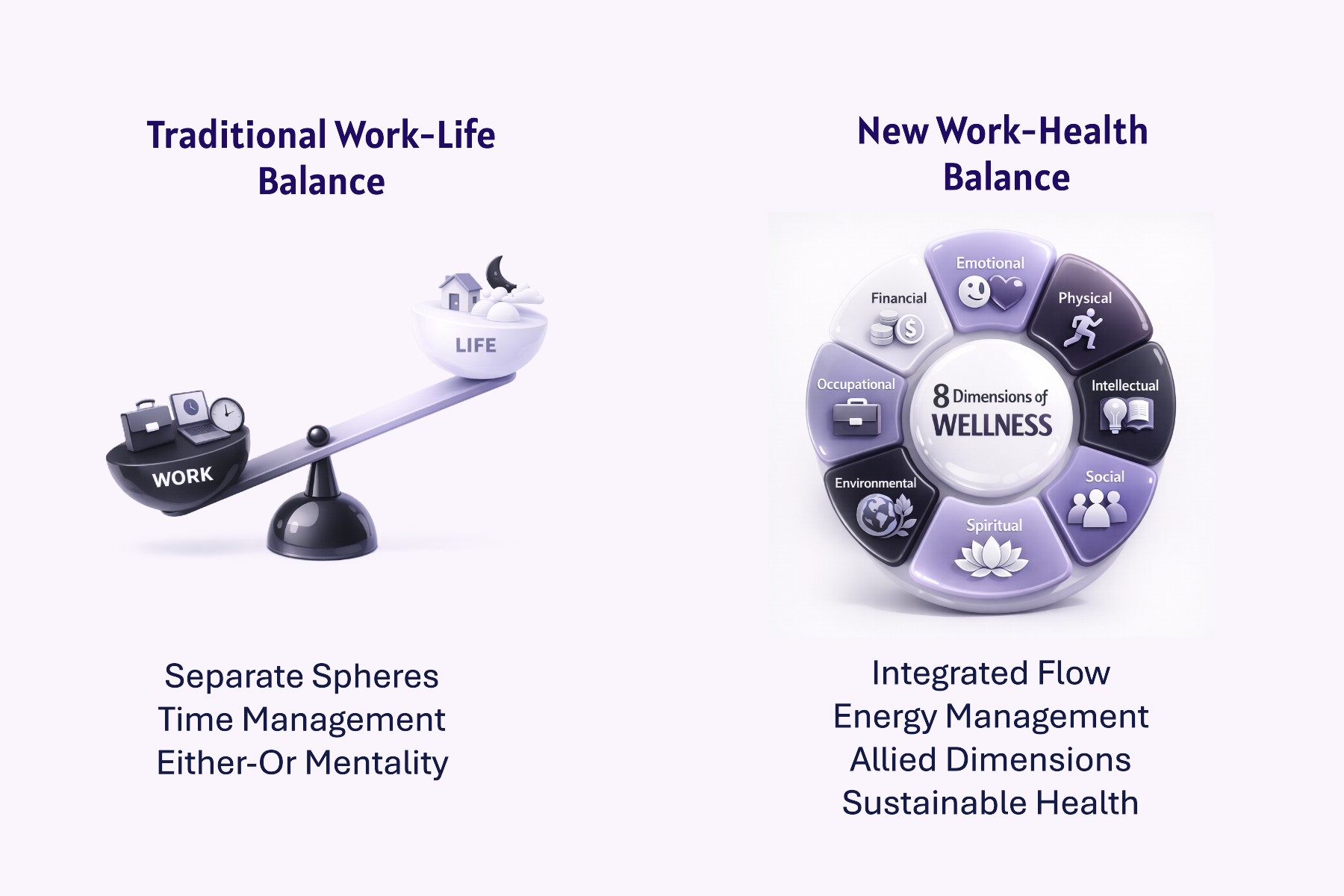
    • Old Model: Balance = splitting time between work and life.
    • New Model: Balance = sustaining health across all wellness dimensions, supported by work culture and policies.

    Work is not separate from life—it is part of the ecosystem that shapes health. The goal is not just productivity or avoiding burnout but fostering environments and personal practices that promote health rather than undermine it.

    Key Principles

    1. Holistic View: Consider all dimensions of wellness—mental, physical, social, financial, environmental.
    2. Stress Relationship: Focus on managing stressors, not just stress symptoms.
    3. Shared Responsibility: Individuals and organizations must align work expectations with health outcomes.
    4. Integration: Work should support, not compete with, overall well-being.

    Bottom Line

    Work-life balance as a time metric is obsolete. The future is Work-Health Balance, where success is measured by how well work and life activities collectively sustain health and resilience.

    What do you think? Are we ready for this shift?